

Annual Report 2024–25
Encouraging Fair and Productive Workplaces
Land acknowledgment
The work of the Canada Industrial Relations Board spans across Canada, on the traditional territories of Indigenous Peoples. This report was prepared in Ottawa, the traditional, unceded, and unsurrendered land of the Algonquin Anishinaabe People. We express our gratitude for the opportunity to live and work on these lands and honour all First Nations, Inuit, and Métis Peoples.
Reconciliation is an ongoing responsibility, and we acknowledge our role in this process. We encourage all who engage with our work to learn more about the peoples whose traditional lands they are on.
Message from the Chairperson

As the newly appointed Chairperson of the Canada Industrial Relations Board since May 1, 2025, it is my pleasure to transmit to you this Annual Report of the Canada Industrial Relations Board for submission to Parliament. It covers the period from April 1, 2024 to March 31, 2025, the fiscal year prior to my appointment.
During the course of the reporting period, the Board has continued to handle a wide range of labour and employment issues in the federal sector, including complex labour disputes between unions and federally regulated employers, complaints from employees about reprisals or unjust dismissals and appeals related to unpaid wages and health and safety issues.
The Board’s main goal is to resolve these matters fairly and efficiently. It focuses not only on making decisions but also on assisting parties settle their disputes informally without resorting to formal adjudication. In fact, many cases brought to the Board are resolved through these efforts. For instance, in the 2024-2025 fiscal year:
- 73% of unjust dismissal complaints were settled during mediation; and
- 63% of unfair labour practice complaints (excluding duty of fair representation complaints) were resolved without requiring a decision from the Board.
The number of overall matters filed remained stable in 2024-2025 rising 3% from the previous year. The proportion of matters filed under Part I of the Canada Labour Code (the Code) has also slightly increased and continues to represent more than half of the Board’s caseload.
This report provides an overview of the Board’s workload and the results it has achieved over the past year. I hope you will find it informative and helpful in understanding the Board’s important work.
Finally, I take this opportunity to sincerely thank Ginette Brazeau for all her years of service as Chairperson of the Board from December 2014 to April 2025 and express my gratitude for her dedication to the Board and its mandate.
Yours sincerely,
Maryse Tremblay,
Chairperson,
Canada Industrial Relations Board
Section 1–The Board’s Performance
Volume of Matters
In the 2024–25 fiscal year, the Board disposed of 968 cases, an increase of 75 (or 8%) over the previous year. Similarly, the number of new cases also increased by 3% compared to the year before.
In total, 997 applications and complaints were received, with 513 (over 51%) under Part I, 14% under Part II and 33% under Part III. The number of cases filed under Part I of the Code has risen for the third consecutive year and continues to make up over half of the Board’s new cases.
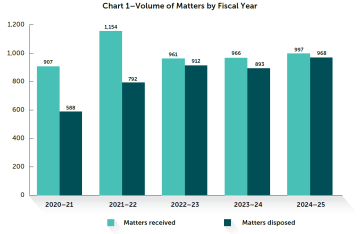
Chart 1–Volume of Matters by Fiscal Year - text description
Chart 1 illustrates the volume of matters by fiscal year.
- In 2020–21, 907 matters were received and 588 were disposed.
- In 2021–22, 1,154 matters were received and 792 were disposed.
- In 2022–23, 961 matters were received and 912 were disposed.
- In 2023–24, 966 matters were received and 893 were disposed.
- In 2024–25, 997 matters were received and 968 were disposed.
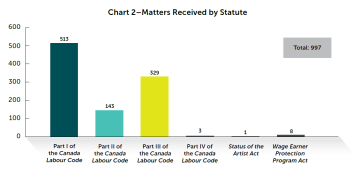
Chart 2–Matters Received by Statute - text description
Chart 2 illustrates the matters received by statute in fiscal year 2024–25.
- Under Part I of the Canada Labour Code, 513 matters were received.
- Under Part II of the Canada Labour Code, 143 matters were received.
- Under Part III of the Canada Labour Code, 329 matters were received.
- Under Part IV of the Canada Labour Code, 3 matters were received.
- Under the Status of the Artist Act, 1 matter was received.
- Under the Wage Earner Protection Program Act, 8 matters were received.
- The total number of matters received is 997.
Main Types of Applications and Complaints Filed Under Parts I, II and III of the Code
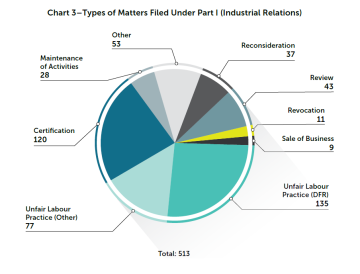
Chart 3–Types of Matters Filed Under Part I (Industrial Relations) - text description
Chart 3 illustrates the number of matters filed under Part I (Industrial Relations) by type.
- 11 revocation matters were filed.
- 9 sale of business matters were filed.
- 28 maintenance of activities matters were filed.
- 53 Other category matters were filed.
- 37 reconsideration matters were filed.
- 120 certification matters were filed.
- 43 review matters were filed.
- 77 Other category unfair labour practice matters were filed.
- 135 unfair labour practice (duty of fair representation) matters were filed.
- The total number of matters filed under Part I is 513.
Duty of fair representation (DFR) complaints represent the largest number of cases filed under Part I of the Code. In addition to offering dispute settlement options to the parties in these matters, the Board disposed of approximately two thirds of these complaints through a preliminary assessment of the complaints (either through a prima facie case analysis or a timeliness analysis). This process allows the Board to triage the DFR complaints it receives and respond to them as efficiently as possible.
Certification applications represent the second largest category of cases received, with an increase of 122% from the previous reporting period.
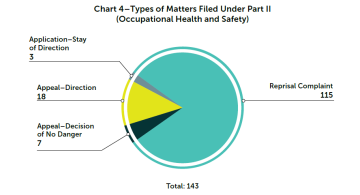
Chart 4–Types of Matters Filed Under Part II (Occupational Health and Safety) - text description
Chart 4 illustrates the number of matters filed under Part II (Occupational Health and Safety) by type.
- 3 applications for a stay of direction were filed.
- 7 appeals of a decision of no danger were filed.
- 18 appeals of a direction were filed.
- 115 reprisal complaints were filed.
- The total number of matters filed under Part II is 143.
As in previous years, health and safety reprisal complaints are the most common type of matter filed under Part II of the Code.
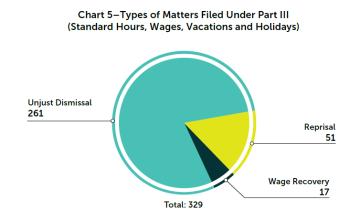
Chart 5–Types of Matters Filed Under Part III (Standard Hours, Wages, Vacations and Holidays) - text description
Chart 5 illustrates the number of matters filed under Part III (Standard Hours, Wages, Vacations and Holidays) by type.
- 51 reprisal complaints were filed.
- 17 wage recovery appeals were filed.
- 261 unjust dismissal complaints were filed.
- The total number of matters filed under Part III is 329.
Unjust dismissal complaints represent the largest proportion of matters filed under Part III of the Code, which is in line with the results from previous years. In 2024-2025, 173 of these complaints were resolved with the assistance of the Board.
Matters Disposed in Fiscal Year 2024-2025
Under Part I of the Code, 63% of unfair labour practice complaints (excluding DFR complaints) were settled. DFR complaints are excluded from this statistic as the majority are dismissed through a preliminary assessment.
While matters filed under Part II of the Code may not seem conducive to mediated settlements, the Board has been instrumental in helping parties find a resolution in 68% of these matters, a significant increase compared to the previous reporting period.
Of all the unjust dismissal matters disposed of in the current reporting period, 73% were settled by the Board. Over half of those matters were resolved prior to being assigned for adjudication.
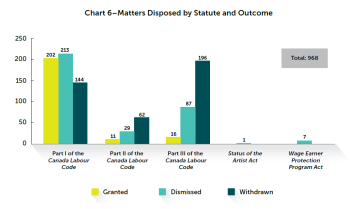
Chart 6–Matters Disposed by Statute and Outcome - text description
Chart 6 illustrates the number of matters disposed by statute and outcome.
- Under Part I of the Canada Labour Code, 202 matters were granted, 213 matters were dismissed, and 144 matters were withdrawn.
- Under Part II of the Canada Labour Code, 11 matters were granted, 29 matters were dismissed, and 62 matters were withdrawn.
- Under Part III of the Canada Labour Code, 16 matters were granted, 87 matters were dismissed, and 196 matters were withdrawn.
- Under the Status of the Artist Act, 1 matter was dismissed.
- Under the Wage Earner Protection Program Act, 7 matters were dismissed.
- The total number of matters disposed by statute and outcome is 968
Processing Times
Processing time includes all the steps involved in processing a matter, such as gathering the written submissions of the parties, offering mediation, holding an oral hearing if necessary and issuing a written decision.
In fiscal year 2024-2025, the Board’s case files were processed, on average, within 416 days, which is a 9% increase over the previous year.
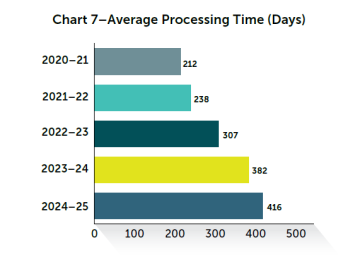
Chart 7–Average Processing Time (Days) - text description
Chart 7 illustrates the average processing time in days.
- In 2020–21, the average processing time was 212 days.
- In 2021–22, the average processing time was 238 days.
- In 2022–23, the average processing time was 307 days.
- In 2023–24, the average processing time was 382 days.
- In 2024–25, the average processing time was 416 days.
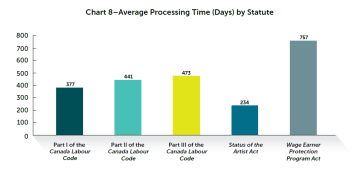
Chart 8–Average Processing Time (Days) by Statute - text description
Chart 8 illustrates the average processing time in days by statute.
- The average processing time for matters under Part I of the Canada Labour Code was 377 days.
- The average processing time for matters under Part II of the Canada Labour Code was 441 days.
- The average processing time for matters under Part III of the Canada Labour Code was 473 days.
- The average processing time for matters under the Status of the Artist Act was 234 days.
- The average processing time for matters under the Wage Earner Protection Program Act was 757 days.
Hearings
A panel may decide a case without an oral hearing based on the written and documentary evidence on file.
Of the 968 matters disposed in fiscal year 2024-2025, 93 proceeded to oral hearings, while the remaining 90% were resolved without an oral hearing. As in recent years, the majority of hearings held during the fiscal year were conducted virtually.
Applications for Judicial Review
During the 2024-2025 fiscal year, 32 applications for judicial review of Board decisions were filed with the Federal Court of Appeal. As of March 31, 2025, 2 of these applications were dismissed, none were withdrawn, 1 was allowed and the remaining 29 were ongoing. In addition, of the applications that remained pending from previous fiscal years, 14 were dismissed, 4 were withdrawn and 2 were allowed.
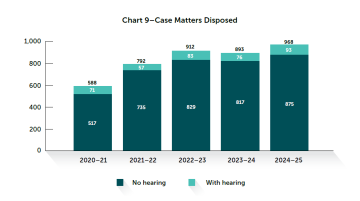
Chart 9–Case Matters Disposed - text description
Chart 9 illustrates the number of case matters disposed with and without an oral hearing.
- In 2020–21, 517 matters were disposed of without a hearing, and 71 with a hearing, for a total of 588.
- In 2021–22, 735 matters were disposed of without a hearing, and 57 with a hearing, for a total of 792.
- In 2022–23, 829 matters were disposed of without a hearing, and 83 with a hearing, for a total of 912.
- In 2023–24, 817 matters were disposed of without a hearing, and 76 with a hearing, for a total of 893.
- In 2024–25, 875 matters were disposed of without a hearing, and 93 with a hearing, for a total of 968.
Section 2–About the Board
The CIRB is an independent, representational and quasi-judicial tribunal. Its mandate is to contribute to, and promote, harmonious industrial relations in the federally regulated sector. It also ensures that federal workplaces comply with health and safety legislation and minimum employment standards.
The CIRB is responsible for interpreting and administering Part I (Industrial Relations) and certain sections of Part II (Occupational Health and Safety), Part III (Standard Hours, Wages, Vacations and Holidays) and Part IV (Administrative Monetary Penalties) of the Code.
The CIRB is also responsible for interpreting and administering Part II (Professional Relations) of the Status of the Artist Act and dealing with appeals under the Wage Earner Protection Program Act.
Sectors or Industries That Fall Under the Board’s Jurisdiction
The CIRB has jurisdiction in all provinces and territories with respect to federal works, undertakings or businesses. These normally include the following sectors:
- Broadcasting (radio and television)
- Chartered banks
- Postal services
- Airports and air transportation
- Marine shipping and navigation
- Canals, pipelines, tunnels and bridges (crossing provincial borders)
- Railways and road transportation that involves crossing a provincial or international border
- Telecommunications
- Grain handling and uranium mining and processing
- Most public and private sector activities in Yukon, Nunavut and the Northwest Territories
- Some First Nations undertakings
- Federal Crown corporations (for example, the national museums)
This vast jurisdiction includes businesses that have a major economic, social and cultural impact on Canadians.
The variety of activities that take place in the federally regulated private sector, as well as the geographical scope and national significance of this sector, contribute to the uniqueness of the federal jurisdiction and the Board’s role.
Aside from the sectors described above, the Board also has jurisdiction over the federal public service to decide appeals of certain decisions and directions made by the Head of Compliance and Enforcement of Employment and Social Development Canada (the Head). Specifically, when the Head makes a decision about a refusal to perform dangerous work or issues a direction under health and safety legislation, the decision or direction can be appealed to the Board.
Status of the Artist Act
The Board is also responsible for interpreting and administering Part II (Professional Relations) of the Status of the Artist Act, which, in addition to broadcasters and Crown corporations, applies to federal government departments and agencies.
Wage Earner Protection Program Act
The Wage Earner Protection Program provides for the payment of eligible wages owing to workers whose employer is insolvent. Service Canada processes the claims made under this program.
The Board decides all applications to appeal the final decisions made by the Minister of Labour (or the delegate) under the Wage Earner Protection Program Act, regardless of whether the former employer was provincially or federally regulated for labour and employment purposes.
Section 3–Composition of the Board
The Code provides for the Board to be composed of:
- one full-time neutral Chairperson;
- two or more full-time neutral Vice-Chairpersons; and
- a maximum of six full-time Members representing employers and employees in equal numbers.
Part-time Vice-Chairpersons and Members may also be appointed to the CIRB. The Chairperson and Vice-Chairpersons of the CIRB must have experience and expertise in labour relations.
The Code allows members whose terms expire to complete the duties that were assigned to them during their active terms (section 12(2)).
The Chairperson can also appoint external adjudicators to determine matters under Parts II, III or IV of the Code, subject to available resources.
Visit the Board’s website to access the list of current Board members and their backgrounds as well as the list of qualified external adjudicators.
Section 4–Key Decisions
Part I – Industrial Relations
Lisher, 2024 CIRB 1128
Key Issues: Revocation Application – Section 39(2) – Allegations of Employer Interference
The Board had certified the Amalgamated Transit Union, Local 279 (the Union) to represent the employees of the Infrastructure Maintenance Department in the Summer of 2021. For various reasons, bargaining for the first collective agreement did not begin until 2022, with bargaining sessions taking place in February, June and December 2022. More bargaining sessions took place over April 2023. The application for revocation was filed in June 2023. Despite the application, more bargaining sessions were scheduled for September and October 2023.
A hearing was held. The Board had to determine whether the situation triggered the protections provided at section 39(2) of the Code.
First, the Board found that the Union had been diligent in serving notice to bargain. It also found that the parties had mutually agreed to negotiate in person, which had slowed down the process. As such, the Union had made a reasonable effort to enter into a collective agreement.
Second, the Board found that the Union had communicated sufficiently with the membership. The Union kept a bulletin board and website with the contact information of union officers. It also held monthly and special meetings to give updates on the negotiations. Further, the membership was happy with having a member be their “eyes and ears” during negotiations. It was the members who had decided not to access the communication tools themselves and to instead rely on a member to attend meetings on their behalf. The Board concluded that the Union had fulfilled the requirements of section 39(2) and was entitled to the protection it affords.
Lastly, following information that came out during the hearing, the Union argued that Alstom Transport Canada Inc., the employer, had interfered in the revocation application. It argued that a manager had stated to the applicant that wages were frozen due to union negotiations. However, that statement had already been put to the Union in October 2022. In the end, given that the Board had dismissed the application and that its mandate is to promote and encourage harmonious labour relations, it decided not to make any findings on these allegations.
Canadian Pacific Railway Company (now known as Canadian Pacific Kansas City Railway), 2024 CIRB 1153
Key Issues: Ministerial Referral – Essential Services Agreement – Input of Potential Affected Groups and Organizations Sought – No Concerns of Immediate and Serious Danger to the Safety or Health of the Public
This decision involved a referral from the Minister of Labour under section 87.4(5) of the Code, asking the Board to determine whether the essential services agreement entered into by the Canadian Pacific Railway Company (now known as Canadian Pacific Kansas City Railway) and the Teamsters Canada Rail Conference (the TCRC) was sufficient to prevent an immediate and serious danger to the safety or health of the public in the event of a work stoppage. A similar referral was made at the same time involving the Canadian National Railway Company and the TCRC.
The Board noted that its task was to balance the principle of free collective bargaining with the protection of the safety and health of the public. Given that the parties had agreed that no services needed to be maintained, the Board wanted to seek the input of other potential affected groups and organizations. Under section 16(f) of the Code, the Board issued a public notice inviting affected groups and organizations to provide their written submissions and views on certain questions arising from the two referrals.
The Board identified five main themes in the submissions. It considered the evidence and submissions and concluded that there were no direct and convincing facts or information that raised concerns of an immediate and serious danger to the safety or health of the public. In terms of the notice required for an impending strike or lockout, the Board stated that, given the risks associated with the shutdown of rail operations, it was prepared to put the parties back in the position they were in when the ministerial referral was made. On that day, there were 13 days left in the 21-day statutory cooling-off period. Therefore, the Board imposed an equivalent 13-day cooling-off period for the purposes of section 89(1)(d) of the Code.
Vidéotron Ltd., 2024 CIRB 1158
Key Issues: Referral Under Section 65 of the Code – Jurisdictional Conflict Between Two Unions – Intended Scope of the Bargaining Units – Regions Identified in the Bargaining Unit Orders – Remote Work – Change of Employee’s Place of Residence
Vidéotron Ltd. (the employer) introduced a policy on remote work whereby employees must perform their work within the region associated with their bargaining unit. Thus, according to the employer, any employee in a certified bargaining unit who performs their work from home, when this is outside the boundaries of the region associated with the bargaining unit to which they belong, would be excluded from their unit. The introduction of this policy created a jurisdictional dispute between two unions over employees who work remotely and move from one region to another.
The Board interpreted the intentional scope of the bargaining units. It pointed out that, in this case, there was no change to the position or home port that could link the relocating employee to the other bargaining unit, that is, the one associated with the administrative region in which they now lived.
The Board noted that the employer had not invoked any organizational change in its decision to exclude from the bargaining unit an employee who had chosen to relocate outside the boundaries of their unit’s region, other than the possibility of performing, for most of the time, the duties of the position on a remote-work basis. This was not a case where an employee was no longer able to perform their work duties, or to travel to their place of work, when required by the employer.
Consequently, choosing a place of residence is a purely individual decision that cannot be considered when issuing a certification order, any more than it can be considered when the Board is determining the intended scope of a certification order. Even if the wording of the unit refers to employees, the positions held by the employees and the duties they perform are what link them to their employer and to a bargaining unit, not their personal characteristics.
Therefore, the Board concluded that a change in an employee’s place of residence, in such a context, could not have the effect of excluding an employee who works remotely from the intended scope of the bargaining unit, even when the new place of residence is outside the region identified in the Board’s certification order.
Algoma Central Corporation, 2024 CIRB 1166
Key Issues: Movement of Grain Vessels – Are on-ship operations covered by section 87.7? – Did the ratification of the collective agreements render the issues moot?
The Algoma Central Corporation (Algoma) filed an application pursuant to section 87.7 of the Code asking the Board to issue an order that would require striking employees to continue to perform their duties on vessels transporting grain on the Great Lakes-Saint Lawrence Seaway (the Seaway). The Canadian Merchant Service Guild was of the view that section 87.7 did not apply to Algoma’s operations.
Algoma owns and operates a fleet of vessels that transport dry bulk cargo, including grain, on the Seaway. Its vessels are used to transport grain from grain storage and loading facilities in Thunder Bay, Ontario, to other ports in Canada and the United States.
When the application was filed, a strike was imminent. However, by the time the Board heard the application, new collective agreements had been ratified. The Board found that section 87.7 did not establish any condition that must be met before it could determine the applicability of that section. Further, there continued to be a legitimate dispute between the parties on whether the section applied to the operation of grain vessels. Therefore, the Board found that there was a labour relations purpose to be served in deciding the matter.
The Board applied principles of legislative interpretation to section 87.7. It found that the first part of section 87.7(1) applies to employers in the longshoring industry and other employers engaged in navigation and shipping. Regarding the second part, the Board highlighted that it refers specifically to services provided to grain vessels and services that ensure the movement of the grain vessels in and out of a port.
The Board also considered the context in which the provision was enacted. This section was added in 1999 following a recommendation of the Sims Report made in the context of increasing concerns about the effects of labour disputes in the West Coast ports. The Sims Report identified two main issues that prompted the addition of section 87.7: the interference in the shipment of grain due to strikes and lockouts in other port industries, and the use of grain shipments as a hostage to compel the enactment of back-to-work legislation.
The Board also kept in mind the primary purpose of the Code, which is to foster the constructive settlement of disputes and free collective bargaining. Therefore, a provision that restricts the right to strike must be interpreted restrictively. Unlike section 87.4 of the Code, which permits any activity to be maintained to prevent an immediate and serious danger to the safety or health of the public, section 87.7 prescribes the specific services to be maintained. These are all services provided to grain vessels. However, section 87.7 does not remove the right to strike in other grain-related operations. The Board underlined that the only services targeted are those provided to vessels that are at a port for the purpose of loading and unloading grain.
As Algoma did not provide services to grain vessels but instead operated the vessels, the Board found that section 87.7 did not apply to its operations.
Partie II – Occupational Health and Safety
Bell Technical Solutions Inc., 2025 CIRB 1171
Key Issues: Application to Appeal a Direction – Prohibition of Interference at the Scene of an Incident – Do Not Disturb Direction – Employee Not Seriously Injured – Equipment Already Removed – Recipient of Direction Must Be Able to Comply – Direction Rescinded
A field technician working for Bell Technical Solutions Inc. (the employer) had fallen from a ladder while performing installation work at a customer’s home, suffering minor injuries. The employer proceeded to investigate the incident and then removed the ladder and equipment from the site.
An official (the ODH) delegated by the Head of Compliance and Enforcement (the Head) issued a direction. The ODH found that the employer had contravened section 127(1) of the Code by interfering at the scene of an accident by removing the truck, the equipment and the ladder related to the accident without the authorization of an ODH.
In the Case Summary Report, the ODH indicated that an error in the direction had been identified. Specifically, the direction should have been issued under section 141(1)(g) of the Code instead of section 127(1). Although the Head indicated that they would not provide submissions, they invited the Board to vary the direction to replace the misquoted statutory reference.
The Board pointed out that the prohibition at section 127(1) applies whenever a serious injury or death occurs at the workplace and remains in place until the Head lifts the prohibition. Notably, the Head is not required to investigate or issue a direction for the prohibition under section 127(1) of the Code to apply. However, section 141(1)(g) provides that the Head, in the context of carrying out their duties, has authority to issue a do not disturb direction in a broad range of situations that do not necessarily involve an accident resulting in death or serious injury. This aims to prevent a place or thing from being disturbed so that the Head can carry out an examination, test, inquiry, investigation or inspection.
The Board found that the prohibition under section 127(1) of the Code did not apply to the incident because the employee had not been seriously injured. It also pointed out that, when the direction was issued, all materials had already been removed from the location of the incident. Therefore, the employer could not have complied with the part of the direction that instructed it to terminate the contravention and ensure that it did not continue. The recipient of a direction must be able to comply with it. Otherwise, the direction does not fulfill a legitimate purpose and there is no need for it.
As for varying the direction to indicate a contravention of section 141(1)(g) of the Code, the Board noted that, when the direction was issued, there was no basis to direct the employer not to disturb the place or thing pending an examination, test, inquiry, investigation or inspection since the equipment had already been removed. Even if a direction pursuant to section 141(1)(g) of the Code instead of section 127(1) had effectively been given to the employer, it would not have been able to comply. The Board also pointed out that the direction would have the force of law only from the moment it was given to the employer. Therefore, the Board concluded that there was no basis to issue a direction under section 141(1)(g) of the Code since, when the ODH issued the direction, there was no place or thing that could be subject to a do not disturb direction. Issuing a direction in these circumstances would serve no purpose since compliance was not possible.
The Board therefore rescinded the direction.
Partie III – Labour Standards
Felix, 2024 CIRB 1122
Key Issues: Unjust Dismissal – Alcohol and Drug Policy and Procedures – Random Alcohol and Drug Testing – Invasion of Privacy and Bodily Integrity – Respondent’s Implementation of Random Alcohol and Drug Testing Is an Unreasonable Exercise of Management Rights
This decision dealt with an unjust dismissal complaint and raised the issue of the legality of random alcohol and drug testing.
The Canadian Pacific Railway Company (now known as Canadian Pacific Kansas City Railway) (the respondent) argued that the complainant had knowingly violated the alcohol and drug policy (the Policy) and alcohol and drug procedures (the Procedures), putting the safety of its operations at risk. The respondent’s position was that the complainant’s policy violations were serious and justified the disciplinary response of termination. The complainant argued that the respondent’s Policy and Procedures, including the random testing program, were an illegal and unreasonable exercise of management rights and that, therefore, the respondent should be prevented from applying the Policy to the complainant. The complainant further argued that, if the Policy and random testing were reasonable, the respondent had not fairly administered them in its response to his drug test results and had failed to inquire whether he had a disability that could be accommodated short of undue hardship. Finally, the complainant argued that if the Policy and the random testing were a reasonable exercise of management rights, the disciplinary response of termination was disproportionate to his misconduct.
In applying the test in Re Lumber & Sawmill Workers’ Union, Local 2537 and KVP Co. Ltd., 1965 CanLII 1009 (ON LA), the Board found that while the respondent was acting for the legitimate objective of ensuring the health and safety of its operations when it enacted the random testing program, it had provided no evidence on whether there were less invasive means to meet its safety objective. The Board recognized that the impact on the employees involved an invasion of privacy and bodily integrity because alcohol and drug tests are a form of medical examination. It found that the program’s infringement of employees’ privacy rights was broader than required because the Policy applied to all operations and all positions, without consideration of demonstrated problems at work locations.
The Board therefore found that the respondent’s implementation of its random alcohol and drug testing was an unreasonable exercise of management rights and that the respondent had implemented a disproportionate response when less invasive means of reasonable suspicion and post-incident testing were available to it. The Board therefore concluded that the respondent could not rely on the evidence obtained through the random testing program.
The Board further mentioned that even if it had found that the respondent could rely on the evidence obtained through the random testing program, it would still have found that the termination of the complainant’s employment was an unjust dismissal because (1) the respondent had not followed its Policy and Procedures in its response to the complainant’s drug test results by not investigating the circumstances of the test; (2) further to expert testimony at the hearing, there was no evidence of actual impairment on the day of the random testing; and (3) the respondent’s witnesses had provided no evidence that they considered a workplace response other than the termination of the complainant’s employment, despite all mitigating factors.
Josipovic, 2024 CIRB 1142
Key Issues: Complaint of Genetic Testing – Section 247.99 – Requirement to Attest to Vaccination Status – Definition of Genetic Test – Vaccination Is Not a Genetic Test
The complainant filed a complaint of genetic testing with the Head of Compliance and Enforcement (the Head) under section 247.99 of the Code against his employer, DHL Express (Canada) Ltd. (the respondent). In the complaint, the complainant claimed that the respondent had disciplined him contrary to section 247.98(4) of the Code because he had refused its request to undergo a genetic test and to disclose the results of a genetic test.
The complaint related to the respondent’s policy about COVID-19 vaccination, which required employees to be fully vaccinated or provide biweekly proof of negative COVID-19 tests. When the complainant did not provide proof of negative COVID-19 tests, the respondent suspended him.
In his submissions, the respondent asked the Board to dismiss the complaint on a preliminary basis for three reasons. First, it claimed that the complaint was untimely. Second, it argued that the appropriate forum to address the issues raised in the complaint was the grievance and arbitration process set out in the collective agreement. Third, it submitted that the COVID-19 tests identified in its policy were not genetic tests within the meaning of section 247.98 of the Code.
After reviewing the parties’ evidence and submissions, the Board first concluded that the complaint was timely.
Second, it was the Board’s view that the subject matter of the complaint was covered by the collective agreement and that the complainant had sought third-party resolution to the issues about the COVID-19 tests. The Board found that the complainant was seeking a reversal of the discipline through the genetic testing complaint as well as through the grievance process under the collective agreement and that the true nature of the dispute in both the grievance and the complaint before the Board was whether the respondent had just cause to issue discipline. The Board was satisfied that these were issues that were covered by the collective agreement and that an arbitrator had jurisdiction to determine them. The Board also noted that an arbitrator has the power to interpret and apply the genetic testing provisions of the Code when these provisions are relevant to a grievance over which the arbitrator has jurisdiction.
The Board did not exercise its discretion to reject a complaint pursuant to section 247.99(6.5) of the Code because it found that the question of whether the COVID-19 tests were genetic tests within the meaning of the Code was an issue that should be heard and determined in the context of this complaint. The Board noted that it had not yet determined this question.
Having carefully reviewed the expert reports, the Board found that COVID-19 rapid antigen tests are not genetic tests within the meaning of the Code because these tests analyze viral proteins and do not analyze human genetic material. The Board also found that polymerase chain reaction (PCR) tests for COVID-19 (both those that detect the presence and absence of RNaseP and those that do not) are not genetic tests within the meaning of the Code because PCR tests analyze the genetic material of the SARS-CoV2 virus and not the employee’s DNA, RNA or chromosomes. The Board noted that the Code’s definition of a genetic test identifies that the test “analyzes the employee’s DNA, RNA or chromosomes.” It determined that this was not the analysis undertaken in the PCR tests because the tests analyzed the viral RNA, not human genetic material. The Board therefore concluded that the COVID-19 PCR tests are not genetic tests.
The Board also noted from its review of the witness reports that PCR tests that amplify human RNaseP are not genetic tests within the meaning of the Code. While these tests amplify human RNaseP in order to detect it, they do not analyze human RNaseP or any human genetic material as contemplated by section 247.98(1) of the Code.
Given the Board’s finding that the tests identified in the respondent’s policy were not genetic tests within the meaning of the Code, it concluded that the complaint had to be dismissed.
Quinlan, 2024 CIRB 1145
Key Issues: Wage Recovery – Section 212 Group Termination – Effect of Notice of Group Termination – Notice of Termination During Layoff
The applicant was an employee of WestJet, an Alberta Partnership (WestJet or the employer) who was laid off on April 16, 2020. Initially, WestJet announced that employees would be recalled to work on October 16, 2020. However, on July 28, 2020, it issued a written notice to the Head of Compliance and Enforcement (the Head) under section 212 of the Code giving 16 weeks’ notice of group termination. Employees, including the applicant, were advised that their employment would end on November 17, 2020. During the notice period, employees received Canada Emergency Wage Subsidy (CEWS) payments. The notice under section 212 commenced a process whereby the employer must create a joint planning committee (JPC). The JPC’s task is to agree on an adjustment program which is intended to minimize the impact of termination on those employees.
An adjustment program agreement (APA) was reached on October 23, 2020. The APA provided employees with severance options. Each employee had to agree to an option and sign a release. The applicant did not select any option within the set time frame. The employer unilaterally selected an option for him. The applicant made a counteroffer that included 16 weeks of notice of termination and requested another severance option provided for in the APA. The employer refused.
The applicant filed a wage recovery complaint with the Head. The inspector found that the applicant was not owed wages beyond what was provided in the APA and issued a notice of unfounded complaint.
Before the Board, the applicant sought 16 weeks’ pay less any CEWS payments he had received. He argued that the 16 weeks was a working notice for which he was entitled to wages. He also sought termination pay for the notice he had received in April 2020 and a top-up to his APA payment that amounted to his preferred option. The employer argued that the section 212 notice to the Head did not trigger any requirement to pay wages. It further argued that it had paid the applicant an amount that exceeded the minimum entitlements under the Code and that the Board was without jurisdiction to consider the elements of the APA.
First, the Board looked at whether the applicant was entitled to any payment in April 2020 when he received his notice of layoff. An employer’s obligations respecting termination pay and severance pay are provided at sections 230 and 235 of the Code, respectively, and apply in the case of layoffs (see sections 230(3) and 235(2)). However, section 30 of the Canada Labour Standards Regulations provides some exceptions where the right to notice is suspended. The initial April 2020 notice of layoff fell within one of those exceptions. However, once the employer advised employees that their employment would be terminated, the protection was lost and termination and severance pay became due. However, since the group termination provisions applied, termination and severance pay would be provided for in the APA. Therefore, the Board found that the applicant was not entitled to two notice periods.
Second, the Board looked at whether the applicant was entitled to 16 weeks’ pay following the notice of group termination to the Head. The Board found that the section 212 notice to the Head did not give rise to a paid notice period for employees; it is instead an additional obligation that applies in the case of group terminations and that provides time to reach an APA. Therefore, the applicant was not entitled to the difference between his normal wages and the CEWS payments he had received during those 16 weeks.
Third, the Board looked at whether the applicant had been paid termination and severance pay in accordance with the Code. The Board noted that when employees are advised of their termination while on layoff, the notice period must be paid. However, since the termination had happened in the context of a group termination, the entitlements to termination and severance pay had been deferred to the APA. In the applicant’s case, he was entitled to a minimum of 10 days’ wages as termination pay and six days’ wages as severance pay, for a total of 16 days’ wages.
For someone with the applicant’s seniority, the APA provided three options that he could choose from: 30 days’ wages, 15 days’ wages with six months of travel benefits or three days’ wages with three years of travel benefits. Only the first option met the minimal statutory requirement. However, the Board saw no issue with offering those options so long as one option met the minimal requirements and employees were free to choose. In this case, the applicant had been provided with 15 days’ wages and six months of travel benefits because he had failed to make a choice. As such, the employer unilaterally imposed an option that was less than the minimal requirements.
The Board found that neither it nor the inspector had the power to ensure that the applicant was allowed to choose his preferred APA option. However, the Board could ensure that the applicant was provided with the minimal entitlements. As such, the Board ordered the employer to pay the applicant one day’s wages.
Status of the Artist Act
Ward, 2024 CIRB 1137
Key Issues: Duty of Fair Representation – Union Not an Artists’ Association – Board Has No Jurisdiction Over Dispute
The complainant filed a complaint against the International Alliance of Theatrical Stage Employees, Moving Picture Technicians, Artists and Allied Crafts of the United States, its Territories and Canada, Local 411 (the Alliance), alleging that it had breached its duty of fair representation and had unfairly prevented her from becoming a member. In response, the Alliance raised a preliminary objection to the Board’s jurisdiction over the dispute as the Alliance is not an artists’ association covered by the Status of the Artist Act (the SAA) but is instead under provincial jurisdiction.
The Board looked at sections 35, 51 and 52 of the SAA, which the complainant alleged the Alliance had violated. The Board found that the common denominator of these provisions is that they apply to artists’ associations. Sections 35 and 51 even specifically speak of a certified artists’ association. However, the Board’s Certification Register contained no record of any certification for the Alliance. Further, given the overarching scheme of the SAA, the Board was of the view that for section 52 to apply, an artists’ association must operate or at the very least intend to operate in the federal jurisdiction. However, there was no indication on file that the complainant worked for a producer covered by the SAA while she was referred to work by the Alliance as a permit worker. Therefore, the Board found no indication that the Alliance operated or intended to operate in the federal jurisdiction.
The Board dismissed the complaint for lack of jurisdiction.